

Pennsylvania Cannabis Product Labels: What Are They Telling You?
TLDR:
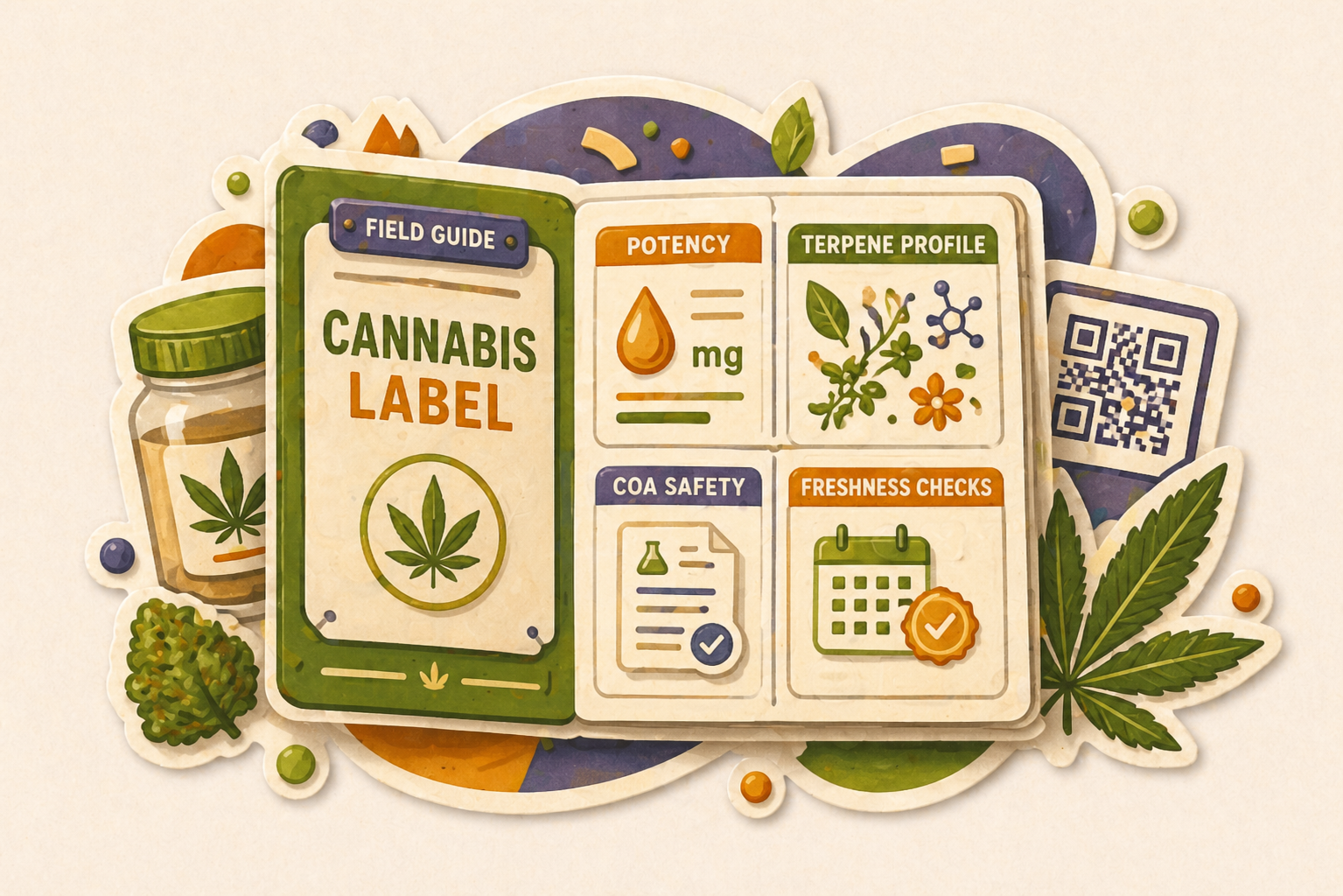
Pennsylvania cannabis product labels tell you how strong a product is, what its terpene profile looks like, whether it passed safety testing, and how fresh it is. For dry leaf, Total THC gives the clearest potency reference, while the terpene panel can help you compare how different products may feel. Before buying, confirm the COA shows a passing safety result and matches the batch number on the package.
Every Pennsylvania medical marijuana label includes the same core information because state regulations require specific fields. If some of the terminology is unfamiliar, our guide to common cannabis terms can help clarify the language you may see on labels and menus. Once you know where to look, those numbers answer four practical shopping questions:
- How strong is this?
- What will it feel like?
- Is it safe?
- Is it still good?
Pennsylvania cannabis product labels also include a few details patients may not see in other states. THC and CBD are listed as milligrams per individual dose rather than only percentages, terpene names are listed individually, ready‑made edibles are not sold in the program, and every product must pass testing from two independent laboratories before it can be sold.
By the end of this guide, you will know exactly which numbers on your cannabis product labels matter and what they tell you about the product in your hand.
How Strong Is This? Reading Potency on a PA Label
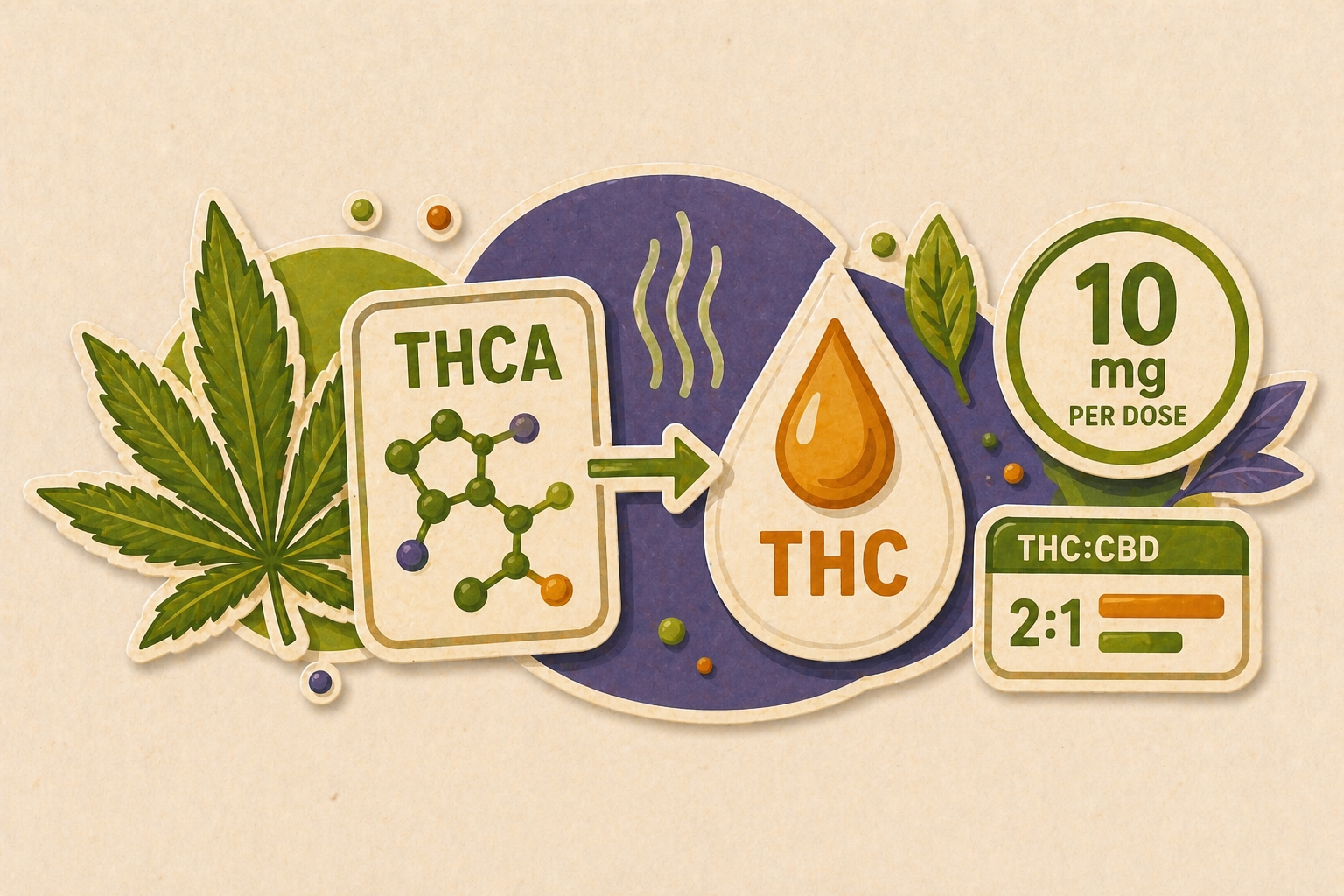
Cannabis product labels list THC and CBD as milligrams per individual dose. This format helps patients understand how much of a cannabinoid they are consuming in a single serving.
A percentage tells you the concentration in the product. Milligrams per dose tells you the amount you actually take at one time. For many patients, milligrams per dose is the number that matters most when choosing a product.
Many labels, especially for dry leaf, show both THCA and THC. This often creates confusion.
| Label Term | What It Means | When It Matters |
| THCA | The raw, unactivated form of THC found in the cannabis plant | Converts to THC when heat is applied during vaporization |
| THC | The activated form that interacts with receptors in the body | Already activated in oils, tinctures, and capsules |
For dry leaf products, look for Total THC. This figure accounts for the conversion of THCA into THC during vaporization and is usually the most reliable potency reference.
You may also see a figure labeled total cannabinoids. This refers to the combined measurable amount of cannabinoids present in the product.
Another helpful detail is the THC-to-CBD ratio. THC and CBD are two of many cannabinoids produced by the plant. If you want a deeper explanation of how these compounds interact, see our guide to types of cannabinoids. THC‑to‑CBD ratio. Products containing both cannabinoids can feel different from those dominated by THC alone. Many patients report that CBD moderates the intensity of THC.
If you are unsure how a specific milligram amount might affect you, a patient advisor can help interpret the label and match potency to your experience level.
What Will This Feel Like? Terpenes and the Profile on Your Cannabis Product Labels
Two cannabis products with the same THC level can feel noticeably different. Why? Terpenes.
Terpenes are aromatic compounds naturally produced by cannabis. They influence the scent and flavor of the plant and may contribute to the way patients report experiencing different products.
Pennsylvania cannabis product labels list individual terpene names and percentages. This gives patients more product information than labels in many other states.
Here are five terpene names patients commonly see on Pennsylvania cannabis product labels. If you want a visual reference of how terpene profiles appear across products, see our cannabis terpene chart:
| Terpene | Scent | What Patients Commonly Report |
| Myrcene | Earthy, musky | Calming or sedating tendencies |
| Limonene | Citrus | Uplifting or mood‑brightening tendencies |
| Caryophyllene | Spicy, peppery | Stress‑relief tendencies |
| Linalool | Floral | Calming or relaxing tendencies |
| Pinene | Pine | Alertness or clarity tendencies |
*These descriptions reflect patterns reported by patients, not guaranteed effects. Cannabis can affect individuals differently.
One practical strategy is to note terpene profiles from products that work well for you. If you want to explore other cultivars with similar profiles, our strain library can help you compare options across different terpene combinations. Terpene combinations tend to be more consistent across batches than strain names alone.
If you are unsure how to interpret a terpene panel, your patient advisor can walk through it with you.
Is It Safe? How to Read a Cannabis COA
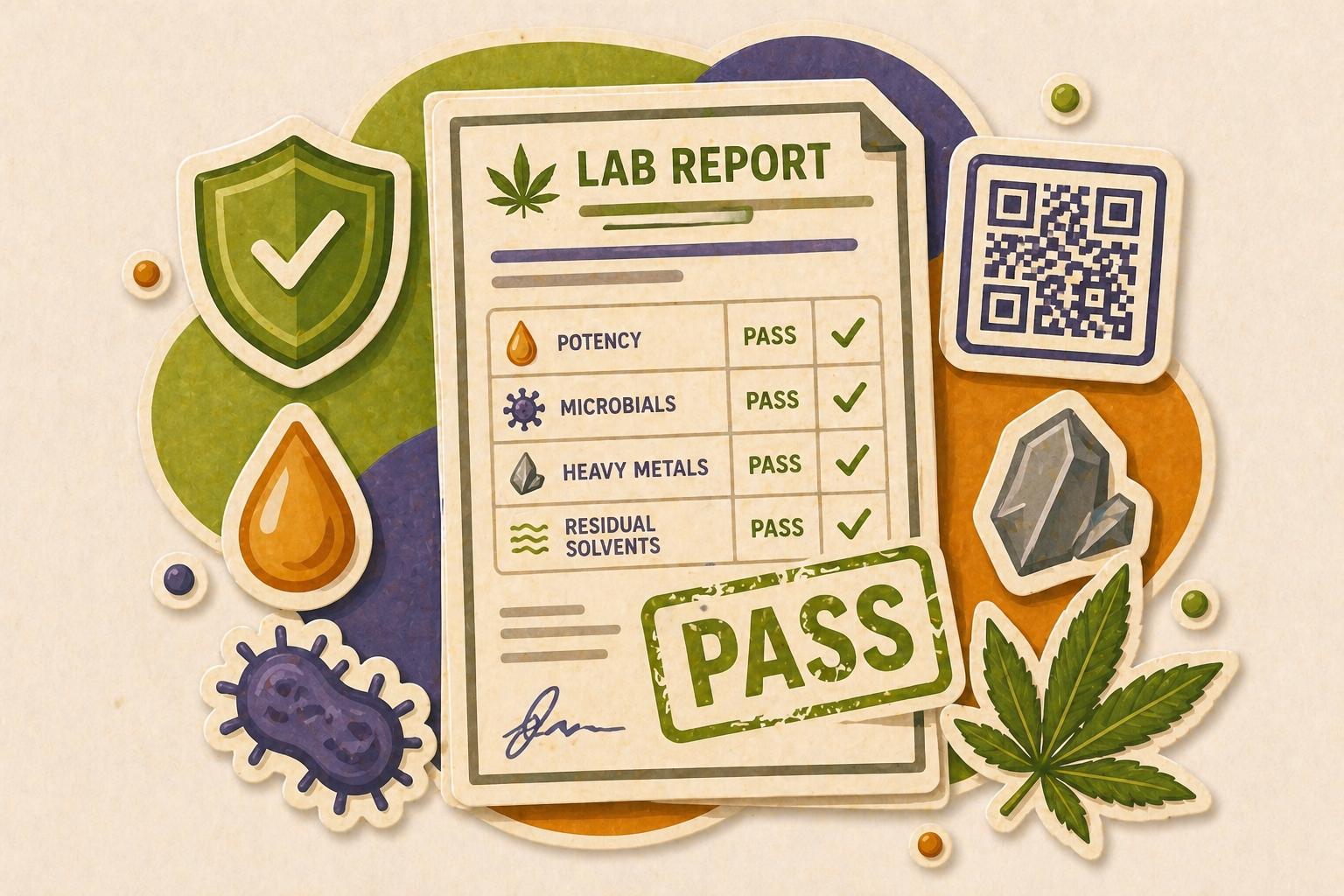
A COA, or Certificate of Analysis, is the independent laboratory report verifying what is in your cannabis product labels.
In simple terms, the COA confirms three things:
- cannabinoid levels
• terpene profile
• contaminant safety testing
Pennsylvania requires a particularly strict testing system. Two separate independent laboratories test every product before it reaches a dispensary shelf. One laboratory tests the harvested plant material and another tests the finished product batch.
Most Pennsylvania cannabis product labels include a QR code on the packaging that links directly to the COA. If there is no QR code, any patient advisor at a dispensary can provide access to the report.
When reviewing a COA, focus on three areas:
- Safety panel
Look for “PASS” across all contaminant categories. - Contaminant testing categories
Pennsylvania requires testing for:
- pesticides
• heavy metals such as lead, arsenic, mercury, and cadmium
• foreign material
• residual solvents in extract products
• microbials including yeast and mold
Every category must pass before the product can be sold.
- Batch or lot number
Match the batch number on the COA to the batch or lot number printed on your product label. When the numbers match, you know the report corresponds to the exact product in your hand.
Terrapin publishes COAs for its products, and patient advisors can help interpret them if anything in the report is unclear.
Is It Still Good? Dates, Freshness, and What Else to Check
Before purchasing or opening check a few additional fields on cannabis product labels.
Packaging date
This shows when the product was sealed. For dry leaf especially, freshness affects aroma, flavor, and potency.
Expiration date
Every Pennsylvania cannabis label includes an expiration date. Products past that date may have degraded potency or altered terpene profiles.
Number of individual doses
This tells you how many servings the package contains and helps patients estimate cost per dose.
Product form
Labels confirm whether the product is dry leaf for vaporization, tincture, oil, capsule, or topical. If you see a troche or oral dissolvable film, it is a sublingual or buccal product, not an edible.
Storage instructions
Most products remain most stable when stored in a cool, dark, dry place.
These checks take only a few seconds but help ensure the product performs the way you expect.
Frequently Asked Questions About PA Cannabis Product Labels and COAs
Why do my Pennsylvania cannabis product labels show milligrams instead of just a percentage?
Pennsylvania regulations require THC and CBD to be listed as milligrams per individual dose. Milligrams per dose help patients understand the amount consumed in a single serving.
My label shows both THCA and THC. Which number should I use?
For dry leaf products, use the Total THC value because it accounts for THCA converting to THC during vaporization. For oils, tinctures, and capsules, the THC number already reflects the activated form.
What is a cannabis COA?
A cannabis COA is a Certificate of Analysis, the laboratory report verifying cannabinoid levels, terpene profile, and safety testing results for a specific batch of product.
How do I find the COA for my product?
Most Pennsylvania cannabis products include a QR code that opens the COA on your phone. If one is not present, a patient advisor at the dispensary can provide access.
What contaminants are tested in Pennsylvania cannabis?
Products must pass testing for pesticides, heavy metals, foreign material, residual solvents in extracts, and microbials including yeast and mold.
Is a higher THC number always better?
Not for most patients. Many people find that moderate THC levels paired with a terpene profile aligned with their goals provide a more comfortable experience than simply choosing the highest THC value.
Your Quick Label Checklist Before Every Purchase
Once you know what to look for, reading a cannabis label takes about thirty seconds.
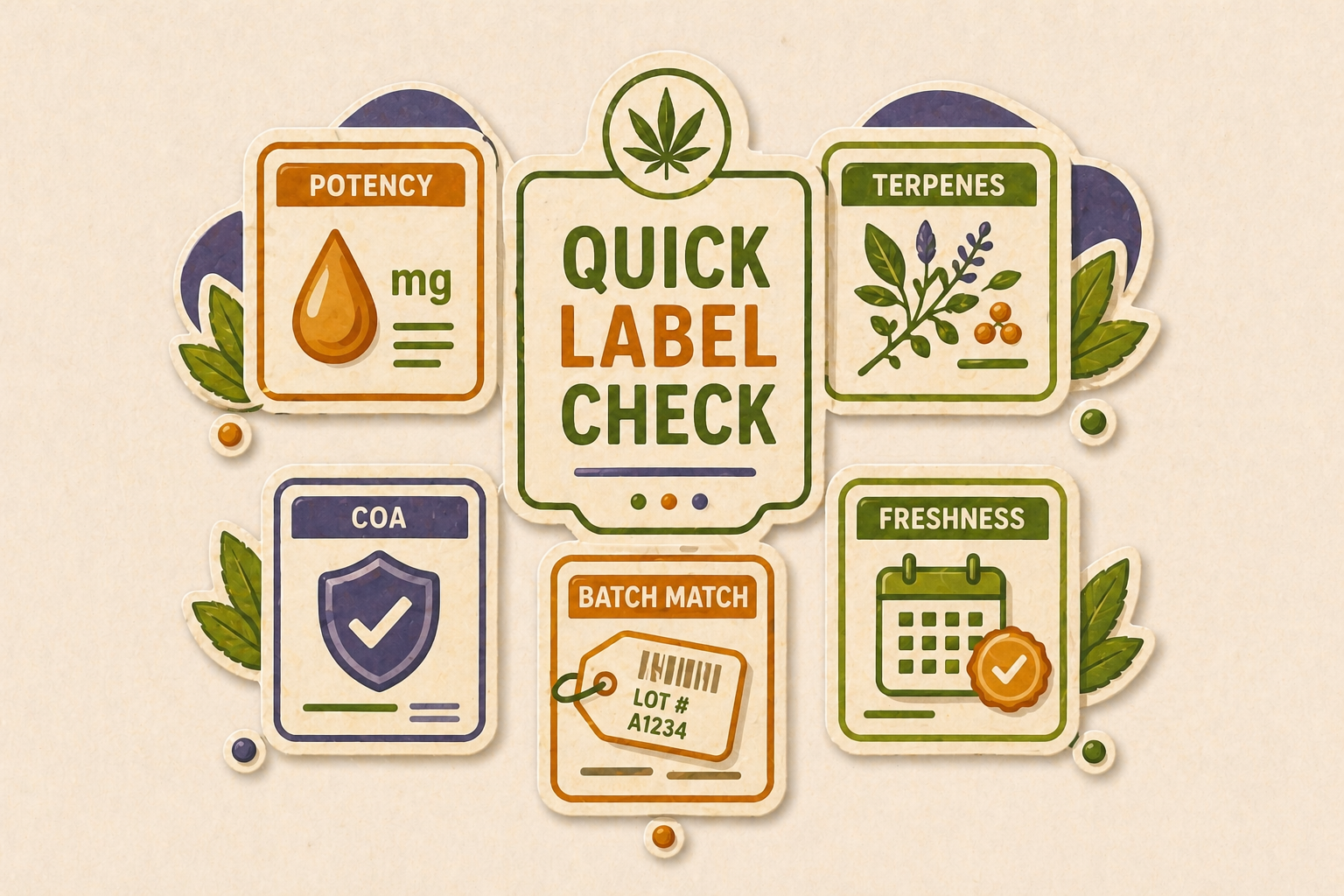
Before purchasing, check five things:
- Potency: What is the milligrams per dose and Total THC? Does it match your experience level?
- Terpene profile: Does the terpene combination align with what you are looking for?
- COA safety panel: Does the report show PASS across contaminant categories?
- Batch match: Does the lot number on the label match the number on the COA?
- Packaging date: Was the product packaged recently?
If anything on the label is unclear, your patient advisor can walk through it with you.
Ready to put this knowledge into practice?
Find your nearest Terrapin dispensary location and explore the available Double Bear products before your visit.