


Limonene Terpene: That Bright Citrus Aroma in Cannabis

TLDR:
Limonene is the terpene behind the bright citrus scent of lemon, orange, and grapefruit. Limonene-rich products may feel more uplifting, alert, and suited for daytime use, though research on these effects remains limited. A citrus name or aroma does not guarantee high limonene, so check the terpene panel to confirm.
The limonene terpene is one of the most recognizable aromas in cannabis. It is the compound responsible for the bright scent of lemon peel, orange rind, and fresh citrus. It also appears regularly across Pennsylvania dispensary products, where terpene profiles are lab-tested and clearly listed. If linalool is soft and floral, limonene is its counterpart: brighter, citrusy, and often associated with a more uplifted quality. Patients exploring terpene profiles will often encounter both as complementary contrasts. You can compare this directly in our guide to linalool terpene effects and strains. By the end of this guide, you will know what limonene terpene smells like, what patients commonly report about limonene terpene effects, why citrus names can be misleading, and how to find limonene strains at a Pennsylvania dispensary.
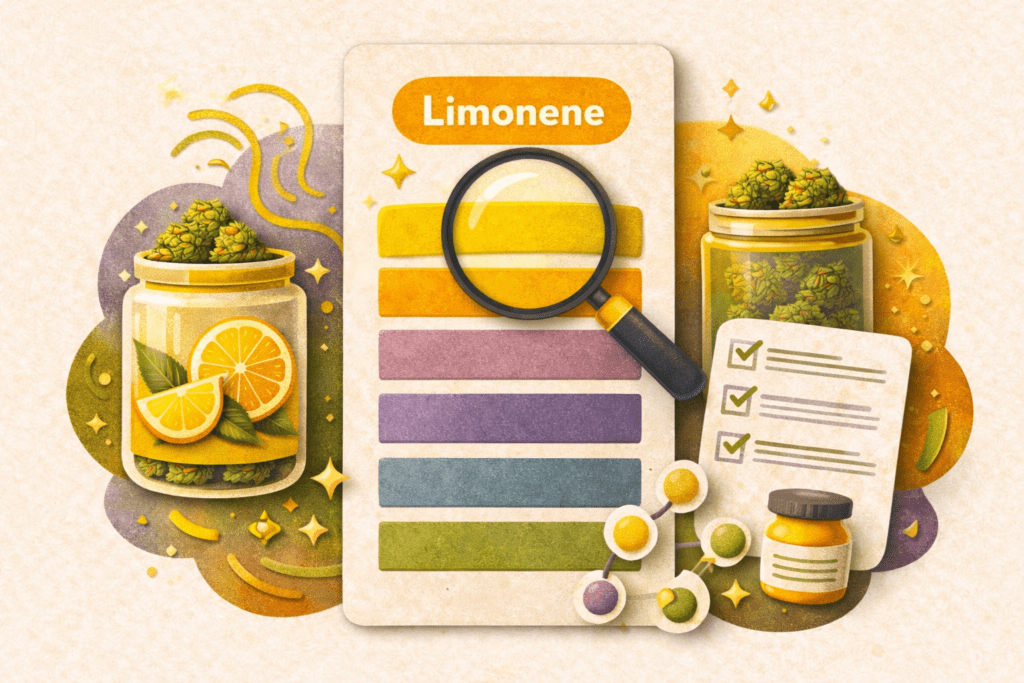
What Is Limonene?
The limonene terpene is a monoterpene, a small aromatic compound found in both citrus fruit rinds and the trichomes of cannabis flower. Its scientific name is d-limonene, the naturally occurring form responsible for its recognizable citrus scent. You will find limonene terpene in lemons, oranges, grapefruits, and limes, as well as in plants like juniper, peppermint, and rosemary. It is also widely used in cleaning products and cosmetics for its fresh citrus aroma. In cannabis, the limonene terpene is one of the most common aromatic compounds, often appearing as a dominant or secondary terpene depending on the strain and batch. It tends to show up in fruit-forward profiles, but not always. Compared to linalool, which is floral and more subdued, limonene brings a sharper, brighter aromatic quality. The two can appear together, creating contrast and balance within a strain’s overall profile.

What Does Limonene Terpene Smell and Taste Like?
Limonene has a bright, fresh citrus aroma. Most patients describe it as lemon or orange forward, though some strains lean toward grapefruit, lime, or tangerine. It is a clean, zesty scent that stands out quickly. Many people recognize it immediately, even outside of cannabis. You may have encountered limonene in citrus-scented cleaning products. It’s the same compound in those familiar scents. In cannabis, it appears in much lower concentrations, contributing a light citrus top note rather than an overpowering smell. One of the most important things to understand is this: a citrus name or aroma does not guarantee limonene is the dominant terpene. At Terrapin, Lemon Gas is myrcene-dominant despite its name. Coffee I Scream has no citrus signal at all, yet the limonene terpene leads its profile. The only reliable way to confirm limonene terpene dominance is to check the terpene panel on the product’s certificate of analysis (COA). If you are new to reading terpene panels, start with this breakdown of cannabis terms and label definitions. On the palate, limonene contributes a crisp citrus note, especially noticeable when using vaporized dry leaf or fruit-forward tinctures.
Limonene Terpene Effects: What Patients and Researchers Report
Research on terpenes at cannabis-relevant doses is still developing, so it is important to separate patient experience from clinical evidence. Patients commonly describe limonene-dominant strains as feeling brighter, more alert, or more uplifting compared to heavier, myrcene-forward profiles. Some prefer these strains for daytime use or social settings. Early research has explored limonene’s interaction with the serotonin system and its potential role in mood regulation. However, these studies are typically conducted at doses much higher than what is found in cannabis products. At this time, no well-controlled human clinical trials confirm limonene as a direct anxiolytic or antidepressant at typical cannabis doses. There is also early evidence suggesting the limonene terpene may support how the body processes other compounds. This may be more relevant for tinctures or capsules than for vaporized products. Limonene terpene does not produce effects on its own. It comes together with cannabinoids and other terpenes, resulting in the entourage effect. To better understand this relationship, explore types of cannabinoids and how they work together. If your goal is daytime support, a brighter experience, or exploring terpene-driven differences, limonene-dominant strains are a practical starting point to discuss with a patient advisor or pharmacist.

How to Find High-Limonene Products at a Pennsylvania Dispensary
Every product sold in a Pennsylvania dispensary is laboratory tested. That testing includes a terpene panel, which is the most reliable way to identify limonene. Start with the COA. Look at the terpene panel and identify which terpene is listed first. That is the dominant terpene for that batch. A limonene concentration around 0.5% or higher generally indicates a meaningful presence. Do not rely on a citrus name or smell. As noted earlier, these can be misleading. Before visiting, you can browse current terpene data on Terrapin’s online menu. At the dispensary, ask a patient advisor to filter options by terpene profile. They can quickly identify available limonene-dominant products based on current inventory. Limonene terpene appears across all approved product formats in Pennsylvania, including dry leaf for vaporization, tinctures, oils, and capsules. For patients using tinctures or capsules, research on compound interaction may be more relevant than for vaporized products. To understand how Pennsylvania regulations shape available products, review Pennsylvania cannabis law and product guidelines.
Limonene Strains: High Limonene Options in the Terrapin Library
Terrapin tests every product for terpene content. The strains below consistently list limonene as the dominant terpene in their published profiles.
Star Killer – Indica
Limonene · Myrcene · Caryophyllene Skywalker OG x Rare Dankness #2. A classic OG-lineage strain with a limonene-forward profile that contrasts expectations. Often chosen by patients looking for evening relaxation with a slightly brighter edge.
Coffee I Scream – Indica
Limonene · Caryophyllene · Myrcene Sunset Sherbert x High Octane. A strong example of why names can mislead. Despite its dessert profile, limonene leads. Commonly selected for evening use.
Key Lime Larry – Hybrid
Limonene · Myrcene · Caryophyllene A Terrapin-bred strain where the name aligns with the terpene profile. Balanced and approachable, making it a useful entry point for patients learning terpene basics.
Rainbow Sherb #54 – Hybrid
Limonene · Linalool · Myrcene A unique combination where limonene leads and linalool follows. This pairing bridges into the next terpene in the series. Patients often note a relaxed, balanced profile.
Sour Tangie –Sativa
Limonene · Myrcene · Caryophyllene A recognizable citrus-forward lineage. A clear example of name, aroma, and terpene alignment. Often chosen for daytime use.
Royal Durban – Sativa
Limonene · Caryophyllene · Linalool A Terrapin-bred strain with citrus lineage tied to Grapefruit Durban genetics. Known for a clear, energetic profile with bright aromatic notes. Terpene profiles are verified batch to batch. You can find current data on each strain’s page or by asking a patient advisor at the dispensary. Browse the full Terrapin strain library.
A Note on Terpenes and Dosing for New Patients
Terpenes are one piece of the overall product profile. A limonene-dominant product with higher THC may feel very different from one balanced with CBD. If you are exploring limonene for daytime or mood-related goals, it is still important to start low and go slow. This is especially true if you are new to cannabis or switching from a different terpene profile.
Frequently Asked Questions About Limonene
What does limonene do in cannabis? Limonene contributes to citrus aroma and may influence how a product feels overall. Patients often describe limonene-dominant strains as brighter or more alert compared to earthy profiles. Research is ongoing, and effects are best understood through patient experience.
Does a citrus smell mean a strain is high in limonene? No. A citrus smell or name does not guarantee limonene dominance. The only reliable way to confirm is by checking the terpene panel on the product COA.
What strains are high in limonene? Limonene appears across many strain types. At Terrapin, Star Killer, Key Lime Larry, and Sour Tangie frequently list limonene first in their terpene profiles. You can explore more options in the Terrapin strain library.
Is limonene the same as d-limonene? Yes. D-limonene refers to the naturally occurring form found in citrus and cannabis. It is responsible for the familiar citrus aroma.
How is limonene different from linalool? Linalool is floral and soft in character, often associated with more calming profiles. Limonene is bright and citrusy, often associated with a more uplifted quality. Compare both in our linalool terpene guide.
Explore the Full Terpene Guide
Limonene is one part of a much larger terpene system. Each terpene contributes its own aroma, character, and role in the overall profile of a product. Explore the full Terrapin Cannabis 101 and terpene guide. If you are ready to apply what you have learned, browse current terpene profiles on the Terrapin or Double Bear menu or speak with a patient advisor at your local dispensary.