

The Cultivation Decisions Behind Small Batch Cannabis
Walk through enough dispensary menus and you’ll start seeing the same language repeated everywhere: small batch cannabis, craft, boutique, premium.
Those words can point toward genuinely careful cultivation. They can also mean totally different things from one grow to the next.
That’s especially true with small batch cannabis. There’s no universal industry definition behind the term, which is why experienced consumers usually pay more attention to process than labels alone.
How was the flower harvested?
How long was it cured?
Was the batch handled carefully enough to preserve the strain the way it was supposed to smell, feel, and vaporize?
A lot of the difference between average flower and mind-blowing flower comes down to cure time, humidity control, trimming methods, and storage conditions.
TL;DR
- Small batch cannabis = smaller, closely managed cultivation runs.
- Craft cannabis and small batch cannabis overlap, but they are not the same thing.
- Harvest timing, trimming, curing, and storage all shape flower quality.
- Proper curing helps preserve terpene expression, texture, and aroma.
- Well-cured flower should feel slightly tacky, aromatic, and structurally stable.
- Terpene percentages, COAs, and packaging details can reveal a lot about flower handling.
What Small Batch Cannabis Means
Small batch cannabis is not a federally regulated production category. No standard plant count or harvest size officially determines whether a grow qualifies.
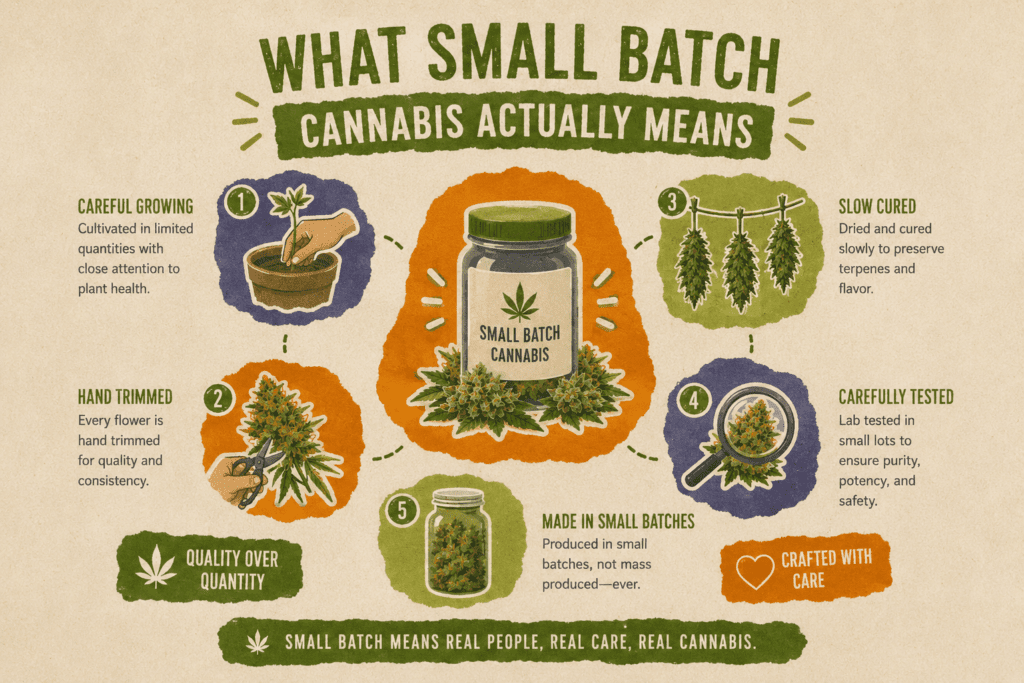
In practice, the phrase usually describes a cultivation style built around smaller production runs and closer oversight throughout the grow and post-harvest process.
Smaller rooms are easier to manage precisely. Growers can respond faster to humidity shifts, nutrient sensitivity, airflow issues, and cultivar-specific behavior.
Some cultivars stretch aggressively during flower and need early canopy management. Others stay dense and compact, which changes airflow requirements deeper into the room. Some hold terpene expression well under stress. Others flatten quickly if environmental conditions drift too far.
Smaller production runs create more room for those adjustments.
That attention usually continues after harvest too. Small batch flower is more likely to be:
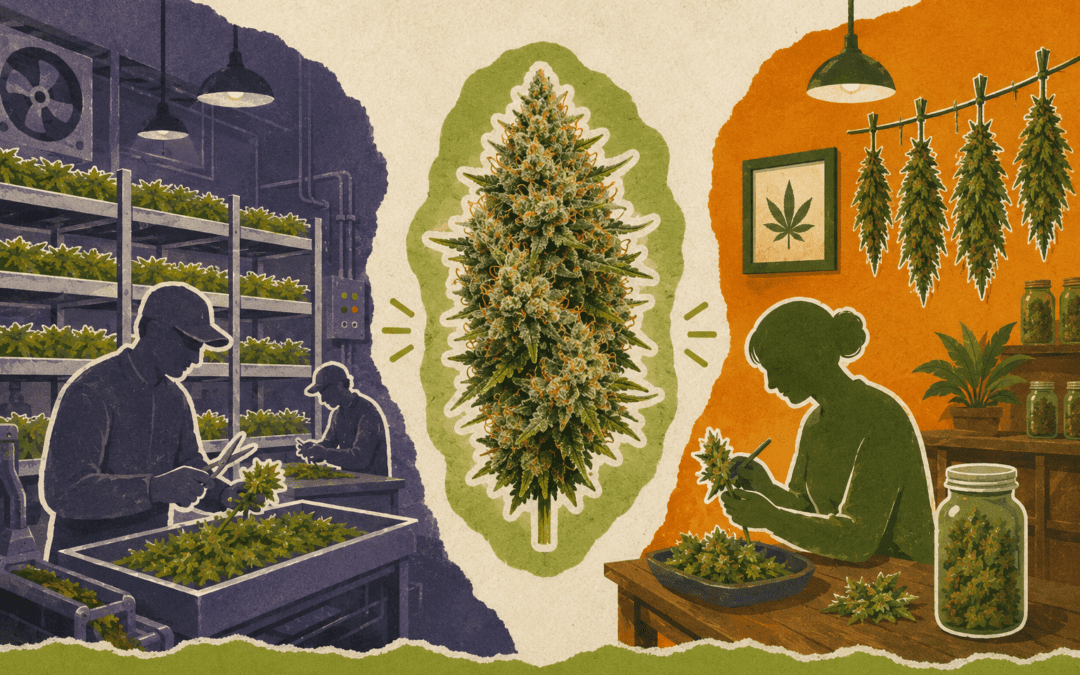
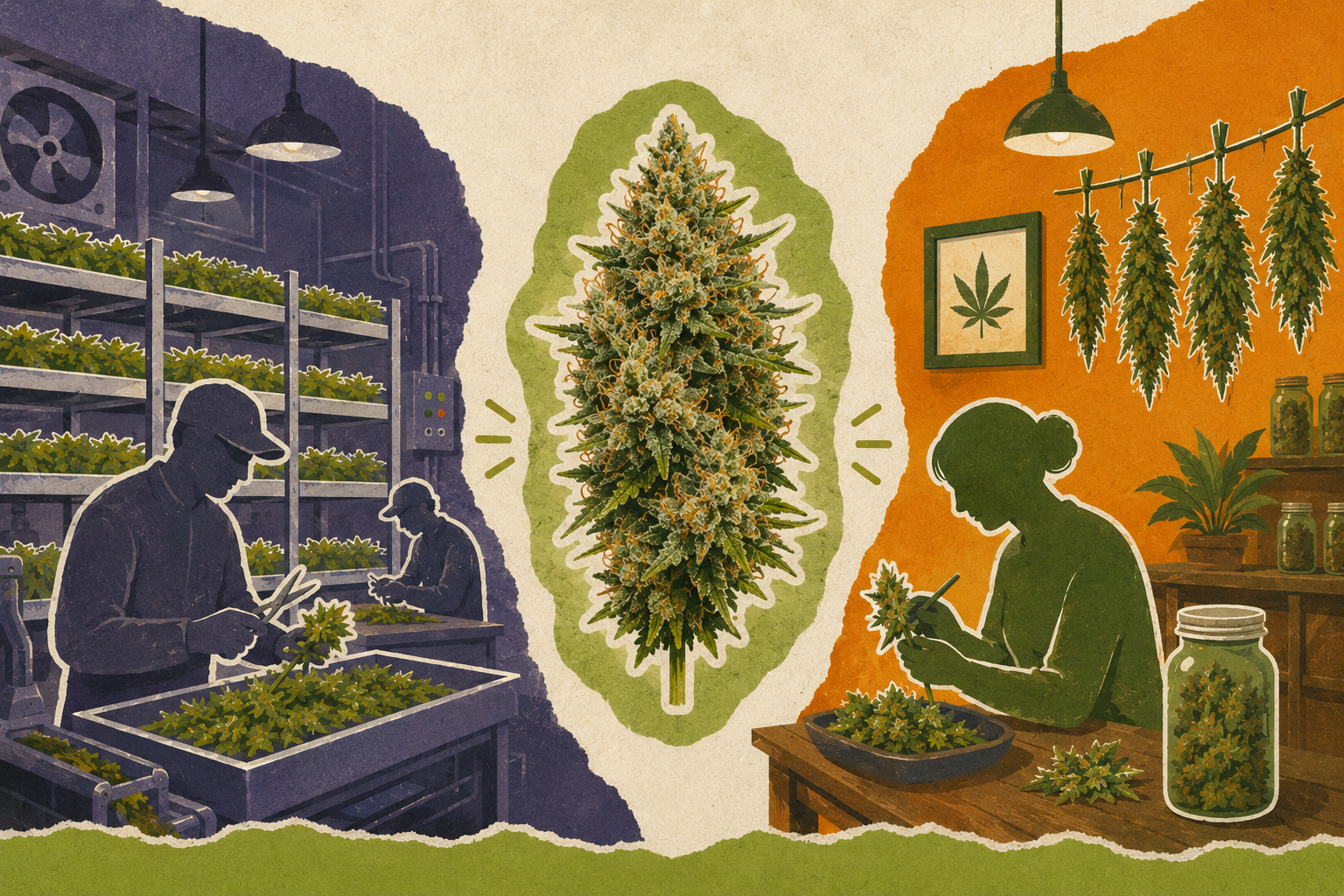
- Hand trimmed instead of heavily machine processed
- Cured in smaller monitored batches
- Stored with tighter humidity control
- Tracked through batch-specific COAs
- Packaged with freshness preservation in mind
We use this process for premium cannabis flower because the final product tends to retain more aroma, structure, and terpene complexity.
Why There’s No Universal Definition
Cannabis regulations focus heavily on testing, packaging, and compliance. Cultivation terminology is less standardized.
That means terms like small batch, boutique cannabis, and artisan cannabis can be useful cultivation signals but they’re not legal classifications.
Small Batch vs. Craft Cannabis
Small batch cannabis describes scale.
Craft cannabis describes approach.
One tells you how much flower is being produced at once. The other points toward how the flower is grown, handled, and finished.
A grow can stay relatively small while still using highly standardized production methods. On the other side, some cultivators apply craft techniques to specific strains or limited releases even inside larger operations.
When we talk about craft weed, we’re usually talking about cultivation decisions that prioritize the finished flower over production speed. That can include:
- Strain-specific growing techniques
- Careful environmental control
- Hand trimming
- Extended cure times
- Terpene preservation
- Smaller monitored harvests
The overlap between small batch and craft cannabis is where a lot of the industry’s most sought-after flower lives.
Smaller runs simply make certain practices easier to maintain consistently.
How Small Batch Flower Is Usually Grown
THC percentages dominate menus because they fit neatly into a single number.
Cultivation quality is harder to summarize that way.
Two strains can test similarly for potency and still feel completely different once the jar opens. Harvest timing, trimming methods, and post-harvest handling all shape how a flower ultimately presents itself.
Harvest Timing
Experienced growers spend a lot of time watching trichome development near the end of flower.
- Clear trichomes usually indicate immaturity
- Cloudy or milky trichomes usually signal peak cannabinoid production
- Amber coloration begins appearing as the plant continues maturing
That transition window matters because terpene expression changes quickly near harvest.
Harvest too early and the flower can feel thin or underdeveloped. Wait too long and brighter terpene profiles may start losing some sharpness and definition.
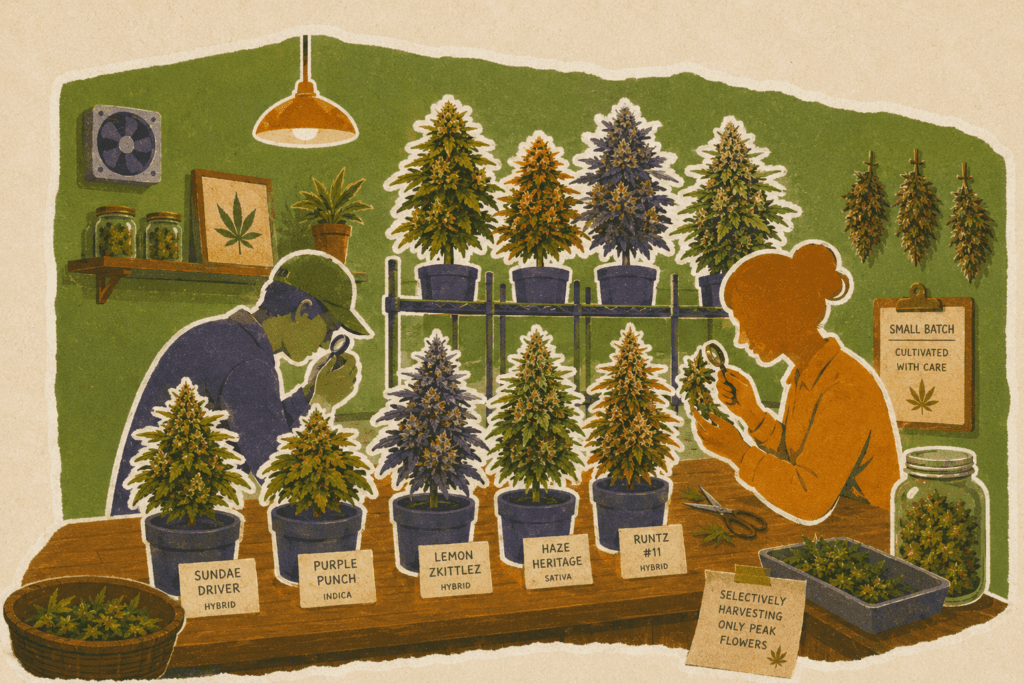
Smaller cultivation runs make it easier to harvest strain by strain instead of pulling entire rooms strictly according to production schedules.
Phenotype Selection
Cannabis genetics won’t be identical from seed to seed.
Small batch cultivation gives growers more room to explore different phenotypes and identify the expressions with the strongest aroma, structure, resin production, or terpene profile.
Larger commercial systems standardize around consistency and throughput. Smaller grows often have more flexibility to preserve distinctive cultivar characteristics.
Hand Trimming and Flower Structure
Hand trimming moves slower, but it generally preserves flower structure and trichome coverage more effectively.
Resin-heavy cultivars can lose a surprising amount of surface trichomes during aggressive machine handling. Certain strains tolerate that process better than others, but slower trimming usually retains more of the flower’s natural texture and aroma.
Small Batch vs. Large-Scale Commercial Flower
| Feature | Small Batch / Craft Cannabis | Large-Scale Commercial Cannabis |
|---|---|---|
| Harvest Timing | Trichome-based harvest decisions | Production-scheduled harvests |
| Trimming Method | Usually hand trimmed | Often machine assisted |
| Cure Time | Extended and closely monitored | Faster inventory turnover |
| Phenotype Selection | Multiple expressions may be explored | Standardized for consistency |
| Batch Traceability | Easier to isolate individual harvests | Larger combined runs |
| Terpene Preservation | Higher preservation potential | Greater handling exposure |
A lot of consumers think premium flower starts with potency.
Meanwhile, most growers would probably point to handling first.
Why the Cannabis Curing Process Matters
You can grow excellent flower and still flatten it during curing.
That’s because drying and curing are two different stages.
Drying removes moisture from the outside of the flower. Curing happens afterward, allowing moisture to redistribute gradually throughout the bud while chlorophyll continues breaking down.
A slower process changes almost everything about the final product.
Drying vs. Curing
Dry flower is not automatically cured flower.
Freshly dried cannabis can still smell grassy, burn harshly, or lose terpene definition quickly because the internal moisture balance has not stabilized yet.
Curing slows the process down so the flower settles evenly instead of drying too aggressively from the outside inward.
What Happens During Cure
Several things happen during curing at the same time:
- Chlorophyll continues breaking down
- Moisture redistributes more evenly through the flower
- Aroma compounds stabilize
- Harshness softens
- Terpene expression becomes more distinct
Well-cured flower feels slightly dense with a little tackiness left in the structure. The aroma unfolds more gradually and tends to hold longer after grinding.
Poorly cured flower often feels brittle, smells flatter, and loses terpene intensity quickly once exposed to air.
The 60/60 Baseline
Many cultivators use some variation of the “60/60” baseline as a starting point during cure.
Optimal cannabis cure: approximately 60 degrees F and 60% relative humidity, with daily burping during the first week.
Burping means opening curing containers periodically to release excess moisture while the flower stabilizes internally.
Dense flower can shift humidity quickly during early cure, which is why close monitoring matters so much during the first week or two.
How Long to Cure Cannabis
Most cannabis flower needs at least two to four weeks of curing before moisture levels, aroma compounds, and texture begin stabilizing properly. Some cultivars benefit from even longer cure times depending on density, terpene profile, and moisture content after drying.
Dense flower usually cures more slowly than lighter structures because internal moisture redistributes differently through the bud. Certain terpene profiles also continue developing deeper aroma over time, especially gas-heavy or earth-forward cultivars.
That slower cure is part of why well-handled flower tends to smell more layered and vaporize more smoothly. The chlorophyll edge fades, moisture balance evens out, and the strain’s terpene profile becomes more distinct instead of sharp or grassy.
How to Evaluate Small Batch Cannabis at the Dispensary
Clues that you’re looking at good flower:
Check the Terpene Percentage
Flower testing above 2% total terpenes often reflects careful drying, curing, and storage practices. It’s not a perfect rule, but it’s one of the more useful indicators consumers can access quickly through a COA.
Look for Batch-Specific COAs
Smaller cultivation runs are generally easier to track individually from harvest through packaging.
Strain-specific COAs, harvest information, and batch traceability all suggest tighter handling and more controlled post-harvest practices.
Pay Attention to Texture
Well-cured flower should feel slightly dense with some flexibility left in the structure.
Dry flower tends to grind differently. Aroma dissipates faster once the jar opens, especially in terpene-forward strains.
Check Packaging Details
Packaging matters more than many consumers realize.
Airtight seals, moisture-control packs, and clear harvest information all help preserve freshness after packaging.
Ask About Cure Time and Freshness
Dispensary staff familiar with the cultivation process behind a flower can usually explain how recently a batch arrived, what terpene profile stands out, and how the strain tends to present itself.
That product familiarity tends to follow genuinely small batch flower because batches remain more distinct from one another.
Why The Woods Reserve Chooses Small Batches
At The Woods Reserve, small batch cultivation creates more room to work strain by strain instead of forcing every harvest through the same process.
Their growers focus heavily on exotic cultivars, each with different structure, airflow needs, terpene sensitivity, and finishing windows. Smaller runs make it easier to adjust cultivation and post-harvest handling based on how a specific strain behaves instead of standardizing everything around volume.
Preserving Terpenes and Flavor
One of the biggest advantages of smaller monitored batches is the ability to extend cure times without rushing flower into packaging.
That slower cure helps preserve aroma, moisture balance, and terpene expression more effectively across the batch. It’s also why Woods Reserve flower is packaged with moisture-control packs designed to help maintain freshness after packaging.
Keeping Premium Flower Accessible
High-quality flower often comes with limited availability because smaller cultivation runs naturally produce less inventory.
Rather than treating small batch cannabis like a luxury release, Woods Reserve focuses on keeping carefully handled flower available at a price that still feels approachable for regular consumers.
Smaller Runs, More Intentional Cultivation
Smaller cultivation runs also create more flexibility around day-to-day grow decisions. Adjustments can happen strain by strain instead of applying the exact same approach across a massive production cycle.
That level of oversight tends to support cleaner cultivation practices, more careful environmental management, and tighter post-harvest handling from cure through packaging.
Why Small Batch Cannabis Usually Costs More
Small batch cannabis almost always requires more labor.
Hand trimming takes longer. Extended curing slows inventory turnover. Smaller harvests reduce efficiency at scale. Batch-specific handling creates more work throughout cultivation and packaging.
That added cost is usually tied to preservation rather than potency.
The value shows up in aroma retention, texture, terpene expression, and consistency from jar to jar. Consumers who pay close attention to flower quality tend to notice those differences quickly, especially with terpene-rich cultivars.
At the same time, not every consumer is looking for the same experience. Some prioritize potency or affordability over post-harvest nuance.
Cannabis has always been personal that way.
Good Flower Reflects Time, Handling, and Patience
Small batch cannabis matters because handling matters.
The phrase itself is not a guarantee of quality, but the cultivation practices commonly associated with small batch flower, slower curing, tighter environmental control, hand trimming, and closer batch oversight, all shape the final experience in ways you can smell and feel immediately.
Explore premium flower selections and limited-run strains at https://www.terrapincarestation.com, and learn more about terpene-rich concentrates from https://www.doublebearconcentrates.com.
FAQ
What qualifies cannabis as small batch?
Small batch cannabis refers to flower cultivated in limited production runs with closer oversight throughout growing, harvesting, trimming, and curing. There is no universal legal definition in most cannabis markets, so the term reflects cultivation style more than a certified production threshold.
Does small batch cannabis preserve terpenes better?
Smaller cultivation runs are generally easier to monitor closely during drying, curing, trimming, and storage. That tighter handling can help preserve terpene expression more effectively, especially in aromatic cultivars that lose volatile compounds quickly under poor post-harvest conditions.
How long does the cannabis curing process take?
A proper cannabis curing process usually takes at least two to four weeks, though some cultivators extend cure times further depending on strain structure and terpene goals. Slower curing allows moisture balance and aroma compounds to stabilize more evenly.
Is small batch cannabis the same thing as craft cannabis?
Not exactly. Small batch usually describes production scale, while craft cannabis refers more to cultivation philosophy and post-harvest handling. The strongest flower often combines both: smaller monitored harvests and careful cultivation practices.
How can you tell if flower was cured properly?
Well-cured flower should feel slightly dense and flexible rather than brittle or dusty. The aroma should remain layered and distinct after grinding, and the flower should retain some tackiness instead of feeling overly dry. Batch-specific COAs and terpene percentages above 2% can also indicate careful handling.