

Types of Cannabinoids Explained (THC vs CBD)
Ever wonder why the same cannabis feels different every time? One experience helps you relax, another makes you foggy, and a third lands somewhere in between. The answer: different types of cannabinoids. These are the chemical compounds that give the plant its therapeutic properties and effects. While THC and CBD get most of the attention, the cannabis plant actually produces over 140 different types of cannabinoids, each with its own distinct properties and potential benefits.
Whether you’re curious about cannabis for wellness, exploring medical marijuana in Pennsylvania, or just want to understand what you’re consuming, this guide breaks down everything you need to know. We’ll cover the types of cannabinoids, how they work, what makes them different from each other, and what the research says about their potential benefits.
What Are Cannabinoids?
Cannabinoids are the active chemical compounds in cannabis. Think of them as the ingredients that actually produce effects when they enter your body. They’re naturally occurring chemicals found mainly in the sticky, resin-covered trichomes that coat cannabis flowers, though they also appear in the leaves, stems, and seeds.
The cannabis plant produces around 600 different molecules total, but about 140 of those are classified as cannabinoids. Scientists continue to discover new types of cannabinoids as research methods improve. Each cannabinoid has a unique molecular structure that determines how it interacts with your body, much like having different keys for different locks.
Cannabinoids don’t start out in their final form. In the living plant, they exist as acidic compounds like THCA and CBDA. When you apply heat through smoking, vaping, or cooking, these acidic forms convert into their neutral counterparts like THC and CBD. Heat-activated transformation is called decarboxylation, and it’s what unlocks the therapeutic and psychoactive properties of cannabis.
The Three Main Types of Cannabinoids
Cannabinoids come from three different sources. Understanding these categories helps clarify where these compounds originate and how they function:
Phytocannabinoids
These are types of cannabinoids that come directly from the cannabis plant. Found throughout the flowers, leaves, seeds, and stalks, phytocannabinoids include all the well-known compounds like THC, CBD, CBG, CBC, and CBN. When people talk about cannabinoids, they’re usually referring to phytocannabinoids. These are what you consume when you use marijuana or hemp products.
Endocannabinoids
Your body actually makes its own cannabis-like compounds. These endocannabinoids are produced naturally to help regulate various bodily functions and maintain balance. The two main ones are anandamide and 2-arachidonoylglycerol (2-AG). Unlike phytocannabinoids that you ingest, endocannabinoids are made on-demand and act as chemical messengers throughout your body.
Synthetic Cannabinoids
These are lab-created types of cannabinoids designed to mimic natural compounds. Some synthetic cannabinoids are legitimate medications like dronabinol and nabilone, which are FDA-approved for medical use. However, dangerous synthetic cannabinoids are also sold under names like Spice or K2. Unregulated products can be unpredictable and pose serious health risks. Stick with natural cannabis from licensed dispensaries to stay safe.
How Cannabinoid Synthesis Works in the Plant
Understanding cannabinoid synthesis helps explain why different cannabis strains have such varied effects. The process all starts with one compound: CBGA (cannabigerolic acid).
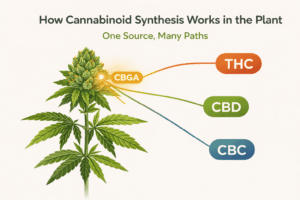
CBGA acts as the precursor for most other cannabinoids. As the cannabis plant grows, specific enzymes convert CBGA into three main pathways: THCA, CBDA, and CBCA. The plant’s genetics determine which enzymes are most active, which explains why some strains are high in THC while others are CBD-dominant.
This natural cannabinoid synthesis process means timing matters when harvesting cannabis. Younger plants tend to have more CBG because the CBGA hasn’t fully converted yet. As plants mature, CBGA converts into other cannabinoids, increasing THC and CBD levels while CBG decreases.
The Endocannabinoid System
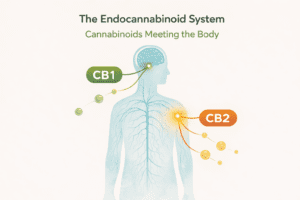
Your body has an entire system dedicated to interacting with cannabinoids. The endocannabinoid system (ECS) was discovered in the 1990s, and it turned out to be one of the most important regulatory systems in the human body.
The ECS works like your body’s master regulator, constantly maintaining balance across multiple systems. It influences appetite, pain sensation, mood, memory, sleep, immune response, inflammation, and more.
CB1 and CB2 Receptors
CB1 receptors are concentrated in your brain and nervous system. When cannabinoids like THC activate CB1 receptors, you experience psychoactive effects like altered perception, mood changes, and increased appetite.
CB2 receptors are primarily found in your immune system, organs, and throughout your body. They manage inflammation, immune responses, and pain without producing psychoactive effects.
The Major Types of Cannabinoids and Their Effects
THC (Tetrahydrocannabinol)
THC is the most well-known cannabinoid, responsible for the euphoric high associated with cannabis. It produces effects like relaxation, altered sensory perception, increased appetite, and mood changes. It is also used therapeutically for pain relief, appetite stimulation, reducing nausea, improving sleep, and managing PTSD symptoms.
THCA (Tetrahydrocannabinolic Acid)
THCA is the non-psychoactive precursor to THC found in raw cannabis plants. It does not produce a high until heat converts it into THC through decarboxylation. Research suggests THCA may have anti-inflammatory, neuroprotective, and anti-nausea properties.
CBD (Cannabidiol)
CBD offers potential therapeutic benefits without psychoactive effects. It is commonly used for anxiety relief, sleep support, pain and inflammation management, and seizure reduction. Epidiolex is an FDA-approved CBD medication for certain types of epilepsy.
CBDA (Cannabidiolic Acid)
CBDA is the acidic precursor to CBD. Early studies suggest CBDA may be particularly effective for nausea and inflammation and may interact with serotonin receptors.
CBG (Cannabigerol)
CBG is often called the mother cannabinoid because CBGA is the starting point for THC, CBD, and CBC synthesis. It is typically present in very low concentrations and is non-psychoactive. Early research suggests potential benefits for pain, inflammation, and antibacterial activity.
CBGA (Cannabigerolic Acid)
CBGA is the precursor compound that plant enzymes convert into THCA, CBDA, and CBCA. Research suggests it may have antibacterial and anti-inflammatory potential.
CBC (Cannabichromene)
CBC is a non-psychoactive cannabinoid that interacts with receptors involved in pain perception. It may support neurogenesis and offer anti-inflammatory and antiviral benefits.
CBN (Cannabinol)
CBN forms when THC degrades over time. It is mildly psychoactive and is commonly associated with sedative effects, making it popular in sleep-focused products.
THCV (Tetrahydrocannabivarin)
THCV behaves differently from THC. At low doses it may reduce appetite and anxiety, while at higher doses it may produce mild psychoactive effects. It is being studied for metabolic and neurological conditions.
CBDV (Cannabidivarin)
CBDV is non-psychoactive and structurally similar to CBD. Research focuses on epilepsy, autism spectrum disorders, and neurological conditions.
The Entourage Effect
Cannabinoids work best together. The entourage effect describes how cannabinoids, terpenes, and other plant compounds interact synergistically to enhance therapeutic effects. Full-spectrum products often provide broader benefits than isolates.
Mango, Myrcene, and Cannabinoids
Mangoes do not contain cannabinoids, but they are rich in myrcene, a terpene also found in cannabis. Myrcene may help cannabinoids cross the blood-brain barrier more efficiently, which is why some users report stronger effects when consuming mango before THC.
Health Potential for the Different Types of Cannabinoids
Research supports cannabinoid use for chronic pain, chemotherapy-related nausea, and multiple sclerosis-related spasticity. Moderate evidence exists for sleep improvement, appetite stimulation, anxiety, PTSD, and Tourette syndrome. Ongoing studies are exploring applications for epilepsy, neurodegenerative diseases, inflammatory conditions, and mental health disorders.
Why Cannabis Feels Different Comes Down to Cannabinoids
Cannabis does not produce one single, predictable effect because it is not powered by one single compound. Every experience is shaped by a unique mix of cannabinoids interacting with your body’s endocannabinoid system. Changes in cannabinoid ratios, how those compounds are activated, and how your body responds all contribute to why the same cannabis can feel calming one time and mentally heavy or energizing the next.
Understanding cannabinoids replaces guesswork with clarity. Instead of relying on strain names or general categories, you gain insight into the chemical drivers behind how cannabis actually works in your body.
Using Cannabinoid Knowledge to Make Better Cannabis Choices
Knowing the role cannabinoids play allows you to approach cannabis more intentionally. Products with different cannabinoid profiles can support different goals, whether that involves relaxation, sleep, focus, pain management, or overall wellness. Minor cannabinoids like CBG, CBC, or CBN can meaningfully influence outcomes, even when present in smaller amounts.
Reading lab labels, asking informed questions at licensed dispensaries, and paying attention to how specific cannabinoids affect you can help create more consistent, predictable experiences over time.
When the Types of Cannabinoids Stop Feeling Random
The types of cannabinoids have never been inconsistent. What changes from one experience to the next is the mix of compounds at work and how your body responds to them. Once you understand cannabinoids, variability starts to look less like unpredictability and more like information. Different outcomes are not accidents. They are signals.
Knowing what drives the experience changes how you engage with all types of cannabis. Instead of relying on strain names or broad categories, you can start paying attention to cannabinoid profiles, lab results, and patterns that show up over time. That shift brings clarity. Cannabis stops feeling like a gamble and starts feeling interpretable.
If you want to explore the types of cannabinoids with the peace of effect clarity, visit Terrapin dispensaries and discover lab-tested concentrates from Double Bear Concentrates, crafted with clearly defined cannabinoid profiles you can understand and trust.