

What Is Cannabis? Everything You Need to Know About the Plant, the Product, and the Culture
Quick Answer: What Is Cannabis?
Cannabis is a flowering plant in the Cannabaceae family that contains naturally occurring compounds known as cannabinoids. When the flowers of these plants are harvested and dried, you’re left with a product that can be used for therapeutic, medical, or industrial purposes. The most well-known cannabinoid is THC (tetrahydrocannabinol), which produces psychoactive effects. Another major cannabinoid, CBD (cannabidiol), does not cause a “high” but may contribute to other therapeutic outcomes.
You might know cannabis by other names like marijuana, weed, ganja, bud, kush, Mary Jane, or reefer—these terms typically refer to the psychoactive form of cannabis that contains THC. See full glossary below.
What. is cannabis? From ancient medicine to modern dispensaries, cannabis has always been more than just a plant. Cultures around the world have used cannabis for healing, rituals, and industry. Today, it’s at the center of a booming market, intense policy debates, and groundbreaking medical research. But what is cannabis? Whether you’re curious about its effects, confused by the terminology, or exploring it for the first time, this guide will walk you through everything you need to know clearly and without judgment.
Intro to Cannabis: Understanding the Plant
Cannabis refers to a genus of plants that includes three primary species: Cannabis sativa, Cannabis indica, and Cannabis ruderalis. These plants can be male or female, but it’s the female flowers that are prized for their high concentration of cannabinoids and terpenes.
Cannabinoids like THC, CBD, CBN, and CBG interact with the body’s endocannabinoid system, which plays a role in regulating everything from mood to appetite to pain response. There are two key receptor types: CB1 (mostly in the brain and central nervous system) and CB2 (found in the immune system and other parts of the body). When cannabinoids bind to these receptors, they influence a variety of bodily functions.
Terpenes are another class of compounds found in cannabis that affect aroma, flavor, and possibly even how cannabinoids work. Think citrus, pine, or lavender—those familiar scents are the work of terpenes like limonene, pinene, and linalool.
Explore the full spectrum of cannabis in our article, Cannabis 101
A Brief History of Cannabis
What is cannabis history? Cannabis has been used for thousands of years across continents and cultures. Ancient texts from China and Egypt reference its use for pain relief and spiritual rituals. In the early 20th century, cannabis faced global prohibition driven by political and social forces, especially in the U.S. under the Marihuana Tax Act of 1937.
Today, cannabis is re-emerging in the medical world, with research ongoing into its potential benefits for conditions like chronic pain, epilepsy, and more. Legalization movements across the U.S. and globally have also revived interest in cannabis as a natural therapeutic option.
Cannabis Strains, Phenotypes, and Clones
Cannabis strains are unique varieties bred to emphasize specific traits such as flavor, cannabinoid profile, and effects. Strains are often categorized as Indica, Sativa, or Hybrid, though these labels are more cultural than scientific.
Each strain can produce multiple phenotypes based on how genes are expressed under different environmental conditions. Think of phenotypes like siblings: same parents, different personalities. One might smell like citrus while another leans earthy, even though they share the same strain name.
A clone is a genetic replica of a particular plant, made by cutting and rooting a stem from a “mother” plant. This ensures consistency in cannabinoid levels, flavor, and growing behavior, making clones invaluable for growers who want repeatable results.
Cannabinoids and How They Work
Cannabinoids are chemical compounds unique to cannabis and hemp. What is cannabis doing when consumed? The compounds interact with the endocannabinoid system by signaling CB1 and CB2 receptors throughout the body. THC binds primarily to CB1 receptors, affecting mood and cognition. CBD interacts differently, influencing receptor activity without strong psychoactive effects.
Other cannabinoids include:
- CBG (Cannabigerol): Considered a precursor to other cannabinoids.
- CBN (Cannabinol): Often associated with aged cannabis and a more relaxing experience.
The interplay between cannabinoids, consumption method, and your own body chemistry shapes your overall experience. In PA, patients often begin with lower doses and adjust slowly over time, a process known as titration. We say “Start low and go slow.”
Terpenes and the Entourage Effect
Terpenes are the aromatic compounds that give cannabis its distinctive scents and flavors, from citrusy and fruity to earthy or skunky. These same compounds are found in other plants like lavender, citrus fruits, and pine.
Common terpenes include:
- Myrcene (herbal, sedative)
- Limonene (citrus, uplifting)
- Pinene (pine, alertness)
- Linalool (floral, calming)
- Caryophyllene (spicy, anti-inflammatory)
- Humulene (hoppy, appetite-suppressing)
- Terpinolene (complex, fresh)
- Ocimene (sweet, herbal)
Together, terpenes and cannabinoids contribute to what’s known as the entourage effect—the idea that cannabis compounds work better together than in isolation.
One plant, hundreds of effects — and it all depends on how you use it. Cannabis is complex, and understanding how it affects your body and mind can help you have a safer, more enjoyable experience. Cannabis interacts with the body’s endocannabinoid system, which plays a role in regulating mood, pain, sleep, and appetite to name a few. Depending on the product, dose, and how it’s consumed, the effects can vary widely. In this article, we’ll break down the most common therapeutic benefits, potential side effects, and how to use cannabis responsibly.
What Causes the Effects of Cannabis?
Cannabis works because of compounds called cannabinoids (pronounced can-uh-bih-noids) and terpenes (tur-peens). The most well-known cannabinoids are THC, which causes the high and helps with pain and nausea, and CBD, which doesn’t cause a high and may reduce anxiety or inflammation. There are also other cannabinoids like CBN and CBG, which offer their own unique effects, such as sleepiness and anti-inflammatory properties.
Then there are terpenes — the natural oils that give cannabis its smell and also shape how a strain makes you feel. For example, myrcene is linked to relaxation, while limonene may boost mood. These compounds work together in what’s called the entourage effect, which means the full experience depends on more than just THC or CBD — it’s the combination that matters.
Now let’s explore some of the most common reasons people use cannabis — and what science says about how it works.
Therapeutic Potential of Cannabis
In Pennsylvania, cannabis is currently legal only for medical use, meaning patients must have a qualifying condition to participate in the program. As a result, the market here is heavily focused on therapeutic benefits, while recreational markets in other states allow people to explore more experience-driven effects like creativity, relaxation, or enhanced socialization. Below are just a few of the therapeutic effects of cannabis:
1. Pain Relief
Cannabis is widely recognized for its analgesic properties. What is cannabis pain relief? Both THC (tetrahydrocannabinol) and CBD (cannabidiol) have been shown to help manage chronic pain by reducing inflammation and altering pain perception. A systematic review found that synthetic products with high THC-to-CBD ratios (>98% THC) may be associated with moderate improvement in pain severity and response (≥30% improvement) and an increased risk of sedation and other adverse events.
2. Sleep Support
Many individuals use cannabis to alleviate insomnia or irregular sleep patterns. What is cannabis sleep support? Studies suggest that CBD alone or with equal quantities of THC may be beneficial in alleviating the symptoms of insomnia. However, further research is necessary before definitive conclusions can be drawn.
3. Mental Health and Mood (Anxiety & Depression)
Cannabis may offer short-term relief from anxiety and depressive symptoms, particularly with high-CBD strains. Frontiers in Psychiatry found that individuals using medicinal cannabis reported reduced depression relative to non-users at baseline. However, the effectiveness varied depending on the THC content of the products used.
4. Neurological Conditions: Epilepsy, Seizure Disorders, MS, Parkinson’s…
CBD has been approved for treating certain forms of epilepsy. In patients with Dravet syndrome, CBD resulted in a greater reduction in convulsive seizure frequency than placebo (nejm.org).
Cannabis may reduce muscle spasticity and neuropathic pain in patients with multiple sclerosis (MS). Journal of Cannabis Research notes that oral cannabinoids have been found to be significantly effective for treating MS-related pain and spasticity.
Medical cannabis rose to prominence largely due to its ability to treat neurological conditions. Charlotte’s Web gained attention as a high-CBD, low-THC strain derived from hemp. It was named for Charlotte Figi, who experienced a dramatic reduction in epileptic seizures from Dravet syndrome at the age of 5. Her story was reported by CNN in 2013, describing her as “the girl who is changing medical marijuana laws across America.”
5. Nausea and Appetite Stimulation
THC is known for stimulating appetite and reducing nausea, which is beneficial for cancer patients undergoing chemotherapy. What is cannabis for nausea? Delta-9-tetrahydrocannabinol (THC) is utilized to manage and treat chemotherapy-induced nausea and vomiting and stimulate appetite (ncbi.nlm.nih.gov).
Common Side Effects of Cannabis
When discussing cannabis side effects, it’s important to consider how cannabis compounds affect the brain and body over both short and long-term use. While some effects are temporary, others may be tied to regular or heavy consumption, especially in young adults with developing brains.
It’s important to remember that the compounds in cannabis affect each person differently. Effects can vary depending on your body chemistry, the strain or product used, and how it’s consumed.
1. Dry or Red Eyes
Red or bloodshot eyes are common due to the dilation of blood vessels. In a study on medical cannabis users, 8.7% reported dry eyes.
2. Cotton Mouth (Dry Mouth)
What is cannabis cotton mouth? Cannabis can inhibit saliva production, leading to a dry mouth sensation. This effect is attributed to THC activation of cannabinoid CB1 receptors in the submandibular glands, which reduces saliva secretion .
3. Distorted Perception or Time Dilation
Users may experience altered perceptions, including a distorted sense of time. A critical review noted that a distorted sense of time is one of the most common effects of cannabis reported by users (pubmed.ncbi.nlm.nih.gov).
4. Impaired Coordination and Cognitive Function
Cannabis use can impair motor coordination and cognitive functions. Frontiers in Psychiatry indicated in a systematic review that cannabis use is associated with cognitive deficits that are relatively small and seem to abate after a short period of abstinence.
5. Tolerance and Dependency
Frequent cannabis use can lead to tolerance, and in some cases, repeated administration can result in physical dependence with withdrawal symptoms observed upon cessation.
How Cannabis Effects Vary by Consumption Method
Finding the right cannabis product is a personal journey. When visiting a dispensary, consider your goals, desired effects, and comfort with different methods of use — a good wellness associate can help answer the question, “What is cannabis,” and guide you to products that match your needs. The consumption methods below are based on what is allowed in the Pennsylvania medical cannabis program. Smokable products and edibles are prohibited.
1. Vaping
Inhalation delivers cannabinoids rapidly, with effects felt within minutes and lasting a few hours. Vaping may result in greater cognitive and psychomotor impairment compared to smoking among infrequent users (pmc.ncbi.nlm.nih.gov).
2. Troches and Consumables
Consumables, like troches, have a delayed onset, typically taking 30 to 90 minutes to take effect, but their effects can last up to 12 hours. A troche (pronounced troh-key) is a small lozenge that dissolves slowly in the mouth to release medication. It’s designed for buccal (cheek) or sublingual (under the tongue) absorption, meaning the medication enters the bloodstream through the tissues in the mouth rather than being chewed and digested. Delayed onset increases the risk of overconsumption, so start low and go slow!
3. Topicals
Topical applications of cannabis are used for localized relief and do not produce psychoactive effects. Topical cannabis has anti-inflammatory, anti-itching, analgesic, wound healing, and antiproliferative effects on the skin
What is Cannabis Responsible Use? Titration and Frequency
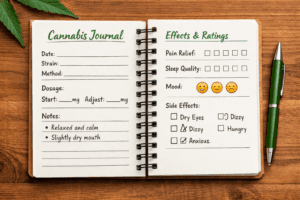
What is cannabis titration? Titration refers to the process of gradually adjusting your cannabis dose to find the minimum effective amount. For THC, it is recommended to start with an initial dose of 0.5–3 mg and then titrate up by small increments until the desired effect is achieved. The frequency of use also affects your experience. Occasional users are more sensitive to lower doses, while regular users may need higher amounts for the same effect. Taking tolerance breaks can reset your baseline and help maintain effectiveness. Understanding your body’s response is especially important when considering cannabis brain effects and cannabis long-term effects. Using cannabis mindfully and in moderation can reduce the risk of developing tolerance, dependency, or cognitive issues over time.
Other Names for Cannabis
What is cannabis by any other name? Cannabis goes by many names depending on cultural, historical, or slang references. Some of the most common include:
- Marijuana
- Weed
- Pot
- Herb
- Ganja
- Mary Jane
- Reefer
- Bud
- Chronic
- Skunk
- Tree
- Hash
- Hemp
- Kush
- Flower
- Blunt
- Joint
- Spliff
- Bhang
- Doobie
- Jazz Cabbage
- Devil’s Lettuce
- Electric Lettuce
- MJ
- Magic Dragon
- Wacky Tobaccy
- Aunt Mary
What is Cannabis? It’s The Plant That Changed the Conversation
Cannabis is more than a single compound or product. It’s a plant with a complex history, a rich chemical profile, and growing relevance in medicine, wellness, and industry. As research and regulations evolve, so will our understanding.
If you’re unsure where to start, consult with a knowledgeable wellness associate at your local Terrapin Care Station dispensary or a healthcare provider familiar with cannabis. With a thoughtful approach, a cannabis brand like Double Bear Concentrates can be a powerful ally in improving wellness — physically, mentally, and emotionally.
FAQ: What Is Cannabis?
What is cannabis?
Cannabis is a genus of flowering plants — Cannabis sativa, Cannabis indica, and Cannabis ruderalis — cultivated for medical and adult-use purposes across Pennsylvania and the United States. The plant produces hundreds of active compounds called cannabinoids, with THC and CBD being the most widely studied and commonly used. Consumers smoke, vaporize, or apply cannabis in various product formats ranging from flower and concentrates to tinctures and topicals.
What is cannabis used for in Pennsylvania?
Cannabis in Pennsylvania is available for both medical and adult-use purposes through state-licensed dispensaries like Terrapin Care Station. Medical patients use cannabis to manage chronic pain, anxiety, insomnia, nausea, inflammation, and dozens of other qualifying conditions. Adult-use consumers purchase cannabis for recreational purposes, choosing products based on desired effects, potency, and consumption method.
How does cannabis work in the human body?
Cannabis produces its effects by interacting with the endocannabinoid system, a network of receptors distributed throughout the brain, nervous system, and immune tissue. THC binds directly to CB1 receptors in the brain, producing the euphoric high associated with cannabis. CBD modulates the system without binding directly to receptors, delivering therapeutic benefits without intoxication. Terpenes and minor cannabinoids work alongside THC and CBD to shape the overall experience.
What is cannabis flower, and how is it different from concentrates?
Cannabis flower is the harvested, dried bud of the female plant and the most common product format at Pennsylvania dispensaries. Flower retains the full spectrum of naturally occurring cannabinoids, terpenes, and plant compounds. Concentrates isolate and amplify these compounds through extraction, producing products significantly more potent than flower — formats like live resin, rosin, distillate, and shatter fall into the concentrate category.
What is cannabis hemp, and how is it different from marijuana?
Hemp is a cannabis plant legally defined by THC content at or below 0.3% on a dry-weight basis. Producers cultivate hemp for fiber, seeds, oil, and CBD extraction. Marijuana refers to cannabis plants with THC concentrations above 0.3%, sold exclusively through licensed dispensaries in Pennsylvania. Both come from the same plant genus, but Pennsylvania law regulates hemp and marijuana separately based on THC potency.
Is cannabis the same as weed, pot, or marijuana?
Yes. “Cannabis” is the scientific term for the plant genus, while “weed,” “pot,” and “marijuana” are common slang terms referring to the same plant. Pennsylvania dispensaries and budtenders typically use “cannabis” or “marijuana” in professional settings, though consumers use all four terms interchangeably. The medical and legal industries strongly prefer “cannabis.”
What forms does cannabis come in at Pennsylvania dispensaries?
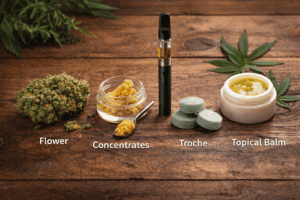
Pennsylvania dispensaries carry cannabis in multiple formats: flower (dried bud for smoking or vaporizing), concentrates (extracts like wax, shatter, and rosin), vape cartridges (pre-filled oil chambers), tinctures (oil-based liquid taken orally), topicals (creams and lotions applied to the skin), transdermal patches, and pre-rolls (ready-to-smoke). Product selection depends on desired effects, onset time, duration, and consumption preference.