

Cannabis Terpenes: Understand Every Strain’s Unique Aroma and Effects
TLDR:
Cannabis terpenes are the compounds that give each strain its aroma and can influence how it feels. Different terpene profiles may lean more toward energy, focus, relaxation, or calm, even when THC levels are similar. Learning which profiles you respond to can make it easier to choose products based on experience instead of strain name alone.
Choosing cannabis by strain name? Try shopping by terpene instead.
Strain names can be misleading, two jars with the same label might smell and feel completely different. That’s because it’s not the name that defines your experience, it’s the terpene profile. Every time you crack open a jar and that wave of citrus, pine, or spice hits your nose, you’re getting a preview of how it will make you feel. Those scents come from cannabis terpenes, nature’s built-in guide to your cannabis experience. Once you start shopping by terpene instead of name, you’ll notice a pattern: your favorite aromas often line up with your favorite effects.
What Are Cannabis Terpenes?
Cannabis terpenes are organic hydrocarbons produced in the resin glands of the cannabis plant. Terpenes, which naturally occur inmany types of plants, serve an evolutionary purpose by attracting pollinators and deterring pests. For humans, they play a much more enjoyable role, shaping how a strain smells, tastes, and potentially feels.
Each terpene has its own aromatic fingerprint and may contribute to specific mood or sensory effects. For example, citrus-scented strains tend to uplift and energize, while earthy or herbal profiles may encourage relaxation.
Scientists have identified over 100 different terpenes in cannabis, but a few dominate most strain profiles. Let’s explore the five most common terpenes found in cannabis and what makes each one unique.

The Five Primary Cannabis Terpenes
1. Myrcene: Earthy and Soothing
Aroma: Musky, herbal, earthy
Found in: Mangoes, hops, lemongrass, and thyme
Myrcene (pronounced mur-seen) is one of the most abundant terpenes in cannabis and is often associated with deeply relaxing effects. It gives many indica strains their signature earthy, slightly sweet scent and is believed to contribute to the “couch-lock” sensation. Beyond its aroma, myrcene may play a role in easing pain and inflammation and is thought to enhance how other cannabinoids are absorbed.
2. Limonene: Bright and Uplifting
Aroma: Lemon, orange zest, grapefruit
Found in: Citrus peels, rosemary, peppermint
As its name suggests, limonene gives cannabis strains their lively, citrus-forward fragrance. It’s commonly found in sativa-dominant varieties, known for boosting mood and promoting focus or creativity. Early research suggests that limonene may offer anti-anxiety and anti-inflammatory benefits and support the body’s immune defenses.
3. Pinene: Crisp and Clarifying
Aroma: Pine, fresh forest air
Found in: Pine trees, rosemary, basil, and dill
Pinene is one of the most common terpenes in nature, it’s what gives pine forests their unmistakable scent. In cannabis, pinene adds a sharp, refreshing aroma and may contribute to improved alertness and focus. Researchers are studying its potential to open airways and counteract some of THC’s short-term memory effects.
4. Caryophyllene: Spicy and Grounding
Aroma: Black pepper, cloves, cinnamon, hops
Found in: Basil, oregano, and black pepper
Caryophyllene, also known as beta-caryophyllene, stands out among terpenes because it’s the only one known to interact directly with the body’s CB2 receptors. This gives it unique potential as an anti-inflammatory and stress-relieving compound. Its scent is spicy and peppery, often noticeable in hybrid strains that deliver a sense of calm without sedation.
5. Terpinolene: Fruity and Floral
Aroma: Sweet citrus, apple, lilac, and herbs
Found in: Nutmeg, cumin, and lilac blossoms
Terpinolene has a complex aroma, both fruity and herbal, and is often found in indica-dominant strains known for their soothing, tranquil qualities. It’s often described as a terpene that “ties everything together,” bringing balance to both uplifting and relaxing varieties.
Other Notable Cannabis Terpenes
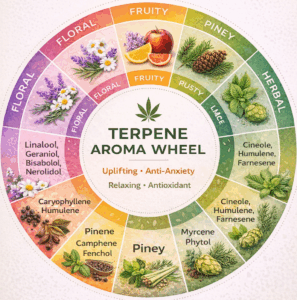
Beyond the five primary terpenes, dozens of others appear in smaller amounts, each adding subtle character to a strain’s scent and feel. Some of the most notable include:
-
- Humulene – Woody, hoppy, and slightly bitter; found in hops and basil.
- Ocimene – Sweet, herbal, and tropical; found in mint, parsley, and orchids.
- Linalool – Floral and soothing; the same compound that gives lavender its calming scent.
- Eucalyptol (Cineole) – Cool and minty; found in eucalyptus and rosemary.
- Bisabolol – Soft, sweet, and floral; present in chamomile and candeia trees.
- Nerolidol – Woodsy and fruity; found in jasmine, lemongrass, and tea tree.
- Valencene – Zesty and orange-like; common in citrus fruit peels.
- Geraniol – Floral and fruity; also found in roses and lemongrass.
- Camphene – Earthy and herbal; contributes a sharp pine aroma.
- Phytol – Fresh and grassy; produced when chlorophyll breaks down.
While these terpenes appear in smaller concentrations, they round out a strain’s terpene profile, influencing its aroma and overall personality, much like background notes in a fine wine or coffee blend.
Why Terpenes Matter in Cannabis
Cannabis terpenes aren’t just about smell, they play a major role in how we perceive and experience cannabis. Two strains with identical THC levels can feel completely different depending on their terpene profile. Think of terpenes as the flavor conductors of the cannabis orchestra, influencing how cannabinoids like THC and CBD perform.
By learning which terpenes you respond to best, you can make more informed decisions about what to buy and how you want to feel, whether you’re seeking energy, creativity, calm, or comfort.
How to Explore Canabis Terpene Profiles
-
- Read lab results: Many dispensaries include terpene data on product packaging or lab certificates.
- Trust your nose: The scent of a strain often reveals its dominant terpenes.
- Track your favorites: Keep a journal of strains and note how their aromas relate to your experience. Over time, patterns will emerge.
Example: Haze Strain Terpene Chart
To see how these terpenes combine in practice, here’s a closer look at the Haze family of strains, known for its uplifting citrus aroma and energetic effects.
| Terpene | Aroma & Flavor Notes | Relative Concentration in Haze Strains | Commonly Found In | Contribution to the Overall Profile |
| Myrcene | Earthy, herbal, slightly sweet | Medium | Mangoes, hops, lemongrass | Grounds the citrus and spice notes with a mellow base, adding body to the aroma and balancing brighter terpenes. |
| Limonene | Bright citrus, orange peel, zest | High | Citrus fruits, rosemary | Provides the signature Haze uplift, the sparkling, mood-elevating aroma that defines the family. |
| Pinene | Fresh pine, forest air | Medium–High | Pine needles, basil | Adds sharp clarity and brightness to the bouquet, keeping the aroma crisp and refreshing. |
| Caryophyllene | Spicy, peppery, clove-like | Medium | Black pepper, oregano | Introduces warm spice beneath the citrus, giving depth and contrast to the fragrance. |
| Terpinolene | Sweet fruit, lilac, herbs | Medium–High | Nutmeg, apples, lilac | Brings floral and fruity complexity, bridging citrus top notes and earthy undertones. |
| Ocimene | Sweet, tropical, slightly woody | Low–Medium | Mint, parsley, orchids | Adds subtle sweetness and an airy, fresh lift to the overall scent. |
| Humulene | Woody, hoppy, slightly bitter | Low | Hops, coriander | Balances the citrus with an earthy finish, rounding out the aroma. |
| Linalool | Soft floral, lavender | Trace | Lavender, birch bark | Smooths sharper terpenes, lending a soft, aromatic finish. |
In summary, Haze strains blend bright citrus (limonene and terpinolene) with grounding herbal and spicy undertones (myrcene and caryophyllene). The result is a layered sensory experience, zesty yet balanced, floral yet earthy, that explains why Haze remains one of the most distinctive and uplifting lineages in modern cannabis.
Shop Smarter, Follow the Aroma, Not the Name
By understanding cannabis terpenes, you stop chasing names and start recognizing patterns. The aromas that draw you in, whether citrusy, piney, or herbal, often point to the effects you love most. Once you learn to shop by cannabis terpenes, finding the right strain becomes second nature.
Cannabis terpenes do more than make your flower smell amazing; they define its personality. Whether it’s the citrus burst of limonene, the pine freshness of pinene, or the floral sweetness of linalool, terpenes shape the sensory and emotional experience that makes cannabis so diverse and fascinating.
The next time you visit your Terrapin dispensary or shop Double Bear, take a moment to appreciate the aroma before you buy. Understanding cannabis terpenes transforms your choice from random selection to intentional exploration, blending science, nature, and personal taste into every session.